- News and Articles
- Blog
Workholding as a strategic investment — Where to start?
Key takeaways
- Workholding is strategic decision: Good fixturing drives long-term capacity, setup efficiency, and shop-floor productivity.
-
Focus on the bottleneck: Always start with the specific production problem, not the hardware.
-
Total value exceeds purchase price: Daily time savings easily outweigh a fixture’s initial cost.
-
Match fixturing to production mix: Dedicated fixtures suit high volumes, while modular systems excel in high-mix production.
-
Start small with pilot projects: Testing improvements on a single process proves value before scaling up.
Why workholding requires a strategic perspective
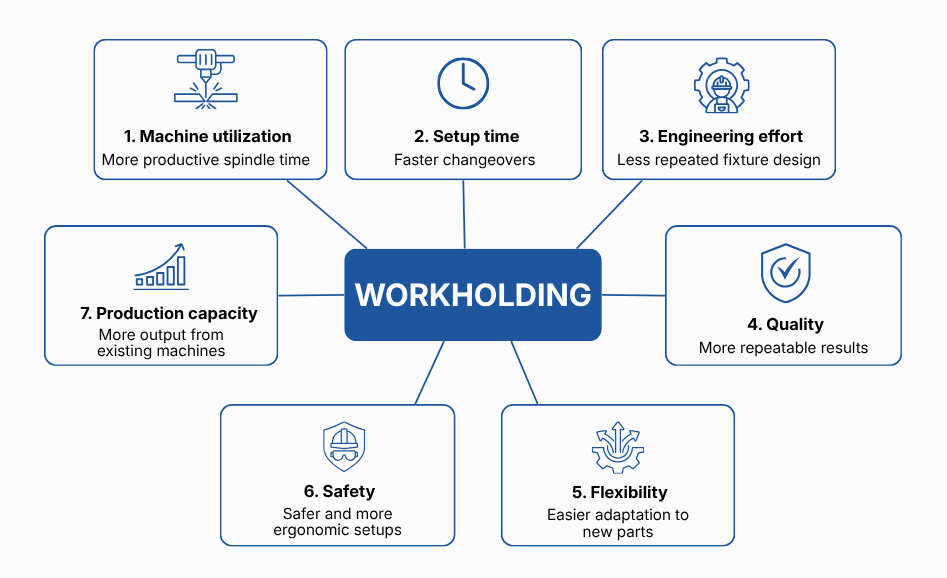
Throughout this article series, we have examined workholding from several perspectives: machine utilization, setup time, production costs, lean manufacturing, safety, and ergonomics.
These topics are closely connected.
A fixture that reduces setup time may also improve machine utilization. A standardized setup can lower engineering effort, support training, and reduce human error. Offline preparation can improve both production flow and the operator’s working conditions. A more flexible fixture concept can reduce the need to design and store dedicated fixtures for every product variation.
For this reason, workholding should not be viewed only as a technical necessity or a purchase made when a new workpiece enters production. It should be considered part of the company’s broader production strategy.
The practical question is therefore not simply:
Which clamp or fixture should we buy?
A more useful question is:
What kind of workholding system best supports the way we want to manufacture now and in the future?
Previous articles:
Workholding influences the entire production process
The visible purpose of workholding is straightforward: locate the workpiece and hold it securely during machining.
Its wider influence is less obvious.
Workholding affects how quickly a setup can be prepared, how many workpieces can be machined in one cycle, how often tools must be changed, how easily production can be transferred between machines, and how reliably an operator can repeat the same process.
It also affects activities outside the machine:
- fixture design
- component purchasing
- setup documentation
- fixture storage
- maintenance
- operator training
- production planning
- automation readiness
This is why the lowest-cost fixture is not always the least expensive solution over its working life. A technically functional fixture may still create recurring costs through long setups, unnecessary handling, limited flexibility, or repeated engineering work.
On the other hand, the most advanced fixture concept is not automatically the best investment. A simple dedicated fixture can be the most efficient solution for a stable high-volume product that will remain unchanged for years. The right decision depends on the complete production environment.
Read more: Why good fixturing matters?
From technical purchase to production investment
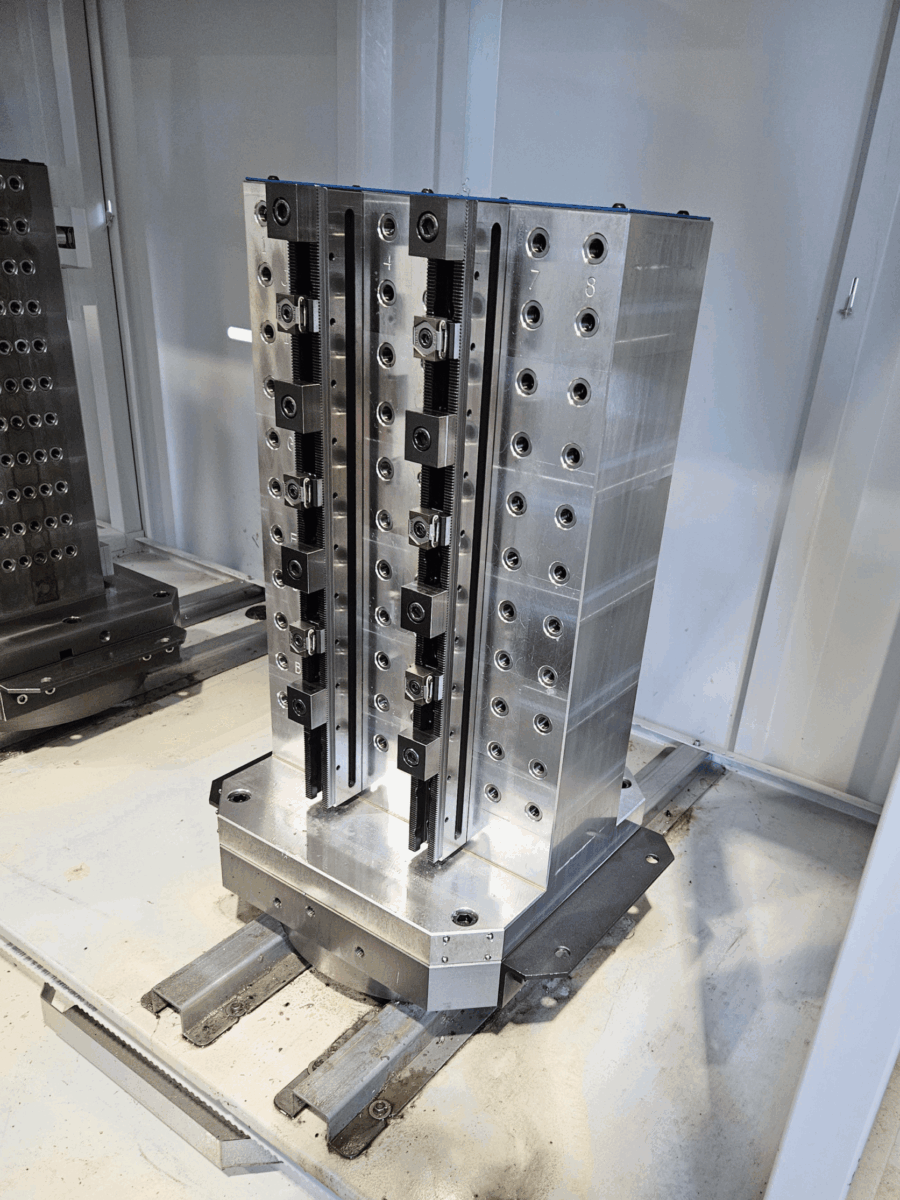
Workholding investments are often compared mainly through purchase price. This is understandable because the initial cost is easy to identify.
You probably already know that the cheapest fixture is not always the least expensive solution in the long run. Even so, it is easy to underestimate how much setup time, machine utilization, and operator workload affect the total cost when different options are compared. The larger financial impact may come from how the fixture performs every day.
Consider two fixture solutions that both produce an acceptable component. One costs less initially but requires frequent manual alignment, longer setup time, and more operator attention. The other costs more but provides repeatable positioning and allows part of the setup to be prepared offline.
The difference between them is not only technical. It may affect:
- available spindle hours
- production capacity
- operator workload
- batch-change responsiveness
- scrap and rework risk
- delivery reliability
- the need for future fixture investments
A strategic evaluation therefore considers both the initial investment and the recurring operational consequences.
This does not require a complex financial model in every case. Even a simple comparison based on annual setup hours, machine-hour cost, engineering time, and expected production volume can reveal whether the purchase price is truly the most important factor.
Start with the production problem, not the product
A common mistake is to begin workholding development by searching for a new fixture product. The more effective starting point is to identify the production problem.
For example:
- Is the machine waiting while the setup is prepared?
- Are fixture changes physically difficult?
- Does every new product require a new fixture design?
- Are setup results dependent on a few experienced employees?
- Is the same workpiece repositioned several times?
- Are too many fixtures stored but rarely used?
- Is production unable to respond quickly to product changes?
- Are pallet pool or FMS positions limited by fixture availability?
- Are operators repeatedly correcting or measuring the setup inside the machine?
Each problem may lead to a different solution.
Long machine stoppages may point toward offline preparation or a zero-point interface. High fixture-design workload may support a more standardized and reusable platform. Stable high-volume production may justify a dedicated fixture that minimizes cycle and changeover time. Automation may require controlled clamping, reliable workpiece location, and clear setup verification.
Starting with the problem prevents technology from becoming the objective. Workholding is valuable only when it improves the production process.
Five questions every Production Manager should ask
1. Where does the machine lose productive time?
The first step is to understand how much of the available machine time is actually used for cutting.
Relevant losses may include:
- setup preparation
- fixture exchange
- workpiece loading
- manual alignment
- probing
- tool changes
- door operations
- operator waiting
- troubleshooting
Not every non-cutting activity can or should be eliminated. However, recurring losses should be made visible. A setup that stops a machine for 30 minutes may not appear significant when considered once. Repeated several times per week across multiple machines, it can represent substantial lost production capacity. The objective is not simply to reduce setup time. It is to determine which setup activities need to take place inside the machine and which could be prepared, verified, or standardized elsewhere.
2. How much engineering work is repeated?
Fixture engineering is necessary, particularly for demanding workpieces and production requirements.
The question is whether the same basic work is being repeated unnecessarily.
For example:
- Are new base plates designed for similar components?
- Are locating principles recreated for every product?
- Are standard stops or supports repeatedly replaced by custom parts?
- Are fixture drawings difficult to reuse?
- Are similar products treated as completely separate applications?
When product families share dimensions, locating surfaces, or machining requirements, a reusable fixture platform may reduce engineering effort.
This does not mean forcing every workpiece onto one universal fixture. It means identifying where standardized interfaces and common components can prevent repeated work without compromising performance.
3. How much does the setup depend on individual experience?
Experienced machinists provide enormous value. Their knowledge should be used to improve the process, not to compensate for an unclear one.
Warning signs of excessive person-dependence include:
- only one operator can prepare a certain setup
- fixture locations are remembered rather than documented
- alignment relies on trial and error
- clamping force is based entirely on personal judgement
- shift changes produce different results
- new employees require long periods of close supervision
Standardized locating, documented component positions, clear tightening instructions, and a defined verification process make expertise easier to transfer.
4. Does the fixture concept match the production mix?
The most appropriate fixture strategy depends strongly on production volume and variation.
A dedicated fixture may be the best solution when:
- the product is stable
- the product is complex in shape
- production volumes are high
- changeovers are frequent but predictable
- cycle-time optimization is critical
- the fixture will be used for a long time
A modular or reconfigurable system may be particularly valuable when:
- batch sizes are small or medium
- products change regularly
- similar product families are manufactured
- fixture engineering resources are limited
- components must be reused
- production capacity must respond quickly to new orders
Many manufacturers benefit from a combination of both: high-volume products may use dedicated fixtures, while changing and lower-volume work is handled on a standardized modular platform.
5. Is the workholding ready for future production needs?
A fixture may solve today’s application but still limit future development.
Useful questions include:
- Can the setup be transferred to another machine?
- Can it be prepared offline?
- Is it compatible with a zero-point system?
- Can it be used on a pallet pool or FMS?
- Can manual clamping later be replaced with hydraulic or electrical actuation?
- Are workpiece positions suitable for robotic loading?
- Can fixture data and setup instructions be documented consistently?
- Can the same platform support future product variations?
Not every company needs automation. However, avoiding unnecessary barriers can preserve future options.
A workholding investment should support the likely direction of production rather than locking the company into a process that becomes difficult to expand.
Classifying applications for a smarter workholding strategy
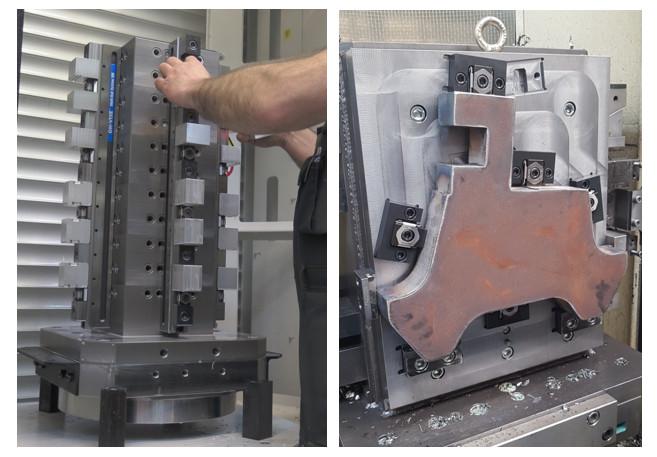
Not every workpiece requires the same level of development. A practical approach is to group applications according to production characteristics.
For example:
Stable high-volyme products
These may justify dedicated fixtures optimized for cycle time, fast loading, and long-term repeatability.
Product families
Parts with similar dimensions or locating principles may benefit from a common base, modular rails, adjustable stops, or interchangeable locating components.
High-mix, low-volume production
Reusable components and flexible positioning can reduce the need to design and manufacture a new fixture for every batch.
Large or complex workpieces
These may require a hybrid solution combining dedicated supports with standardized clamping and locating components.
Automated production
These applications place additional emphasis on controlled actuation, reliable workpiece presence, chip management, accessibility, and repeatable setup verification.
This classification helps prevent overengineering simple applications and underengineering strategically important ones.
Use pilot applications to demonstrate value
A factory-wide workholding project can easily become too large and theoretical. When several machines, product families, fixture types, and production requirements are involved, it may be difficult to demonstrate which changes actually create value.
A more practical approach is to begin with one or two carefully selected pilot applications.
A suitable pilot should have a clearly visible production problem and enough recurring use to make the results meaningful. It is also helpful if setup time, engineering effort, or another relevant factor can be measured before and after the change. Applications involving some product variation are particularly useful when the purpose is to test whether a fixture concept can be reused or adapted.
The people involved are equally important. Operators and engineers should participate from the beginning, because their experience often reveals practical requirements that are not visible in drawings or theoretical calculations.
The purpose of the pilot is not simply to install new components. It is to compare the complete production process before and after the change. This may include machine downtime during changeovers, total setup labour, first-piece approval time, engineering hours, fixture storage needs, setup errors, and operator feedback.
A pilot also exposes practical issues that may not appear during design. Component access, chip accumulation, tool clearance, setup documentation, cleaning requirements, and operator preferences can all influence whether a concept works reliably in daily production.
Once the solution has been tested and the benefits are understood, it can be adapted to other applications with greater confidence. This is usually more effective than introducing a broad workholding standard before it has been proven in actual production.
Avoid common workholding development mistakes
Several mistakes can limit the value of an otherwise capable fixture system.
- Choosing technology before defining the problem
- A modular, hydraulic, electrical, or automated system should solve a specific production need. It should not be selected only because it is technically advanced.
- Focusing only on purchase price
- A lower initial cost may be offset by recurring setup, handling, engineering, and production losses.
- Trying to create one universal fixture
- Excessive universality can add complexity, reduce accessibility, and compromise performance. Standardization should support production, not become a design objective by itself.
- Ignoring operators during development
- A fixture that performs well in a design model may still be difficult to load, clean, tighten, or verify in daily production.
- Automating an unstable manual process
- Automation magnifies both good and bad processes. Locating, clamping, chip control, and verification should be reliable before unattended production is introduced.
- Measuring only cycle time
- The shortest machining cycle does not necessarily create the best production result if setup time, engineering effort, or workpiece handling increases significantly.
Build a workholding strategy, not a component collection
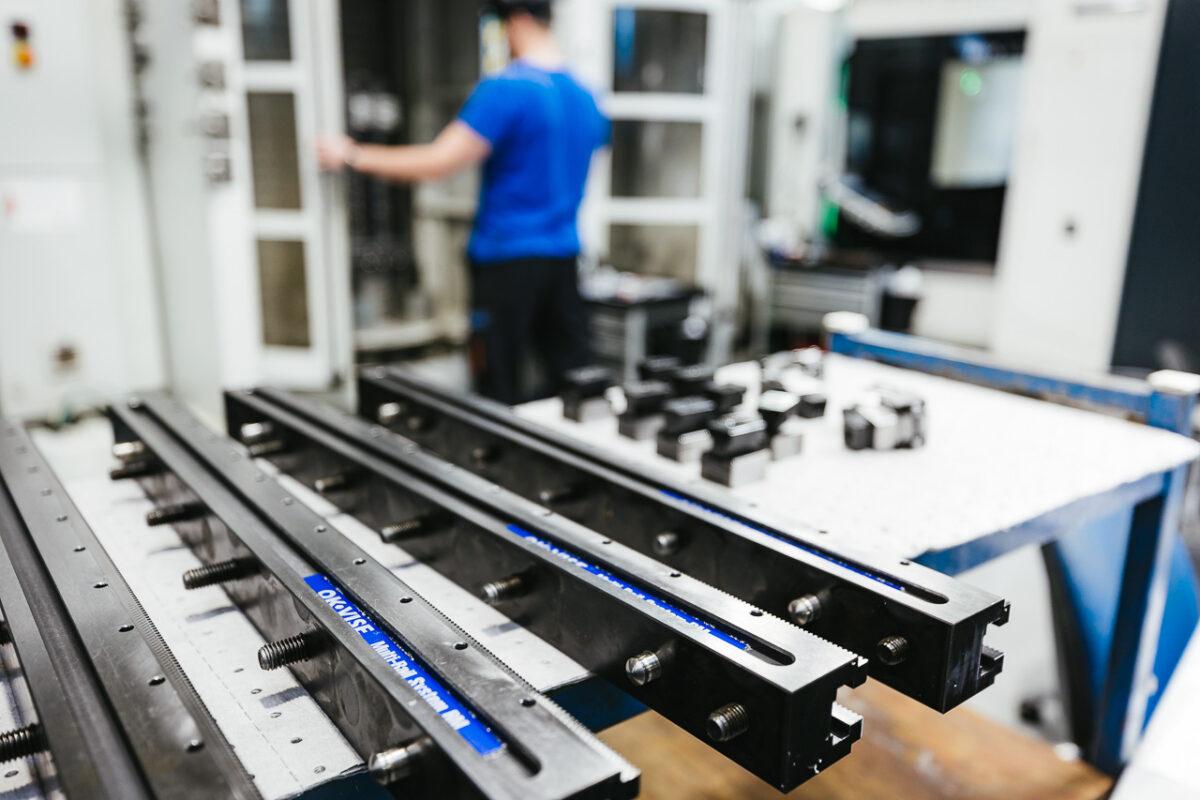
Over time, many factories accumulate a wide range of fixture plates, vises, clamps, stops, supports, base plates, and custom components.
Most of these items may be useful individually. Together, however, they do not necessarily form a consistent workholding system.
A strategic approach defines how components are selected, connected, documented, stored, maintained, and reused. It establishes shared principles without preventing application-specific engineering.
This may include preferred machine interfaces, common mounting patterns, approved component families, consistent fixture heights, standard documentation practices, and clear criteria for deciding when a dedicated or modular fixture should be used.
Storage and identification are also part of the strategy. Even a well-designed component creates little value if it cannot be found when needed or if operators are unsure where it belongs. Similarly, reusable fixtures should have clear ownership, maintenance practices, and documentation.
Automation compatibility may also be considered, even if immediate automation is not planned. Common locating interfaces, predictable fixture geometry, and reliable setup documentation can preserve future options.
The purpose is not to create a restrictive corporate standard that makes every fixture identical. It is to give engineers and operators a reliable starting point and reduce unnecessary variation.
Where a custom solution is genuinely required, it should still fit into the wider production system wherever practical.
The best starting point is often small
Improving workholding does not always require a major capital investment or a complete redesign of the fixture strategy.
The first improvement may simply be documenting a recurring setup more clearly. It could involve preparing one fixture outside the machine, introducing a repeatable interface between the fixture and machine table, or standardizing a small group of commonly used stops and supports.
In other cases, the first step may be reducing the weight of a frequently changed fixture, reorganizing component storage, or reviewing a problematic setup together with the operators who use it.
A modular platform can also be tested on one suitable product family before it is introduced more broadly.
These small improvements are valuable because they reveal where the wider potential lies. They also make the results visible to the people involved.
When operators see that a change reduces unnecessary effort, or managers see that a machine returns to production faster, it becomes easier to support further development.
The long-term objective may be a standardized fixture platform, palletized production, or automated clamping. However, the journey should begin with a practical production problem that can be clearly observed and improved.
Workholding connects the complete production system
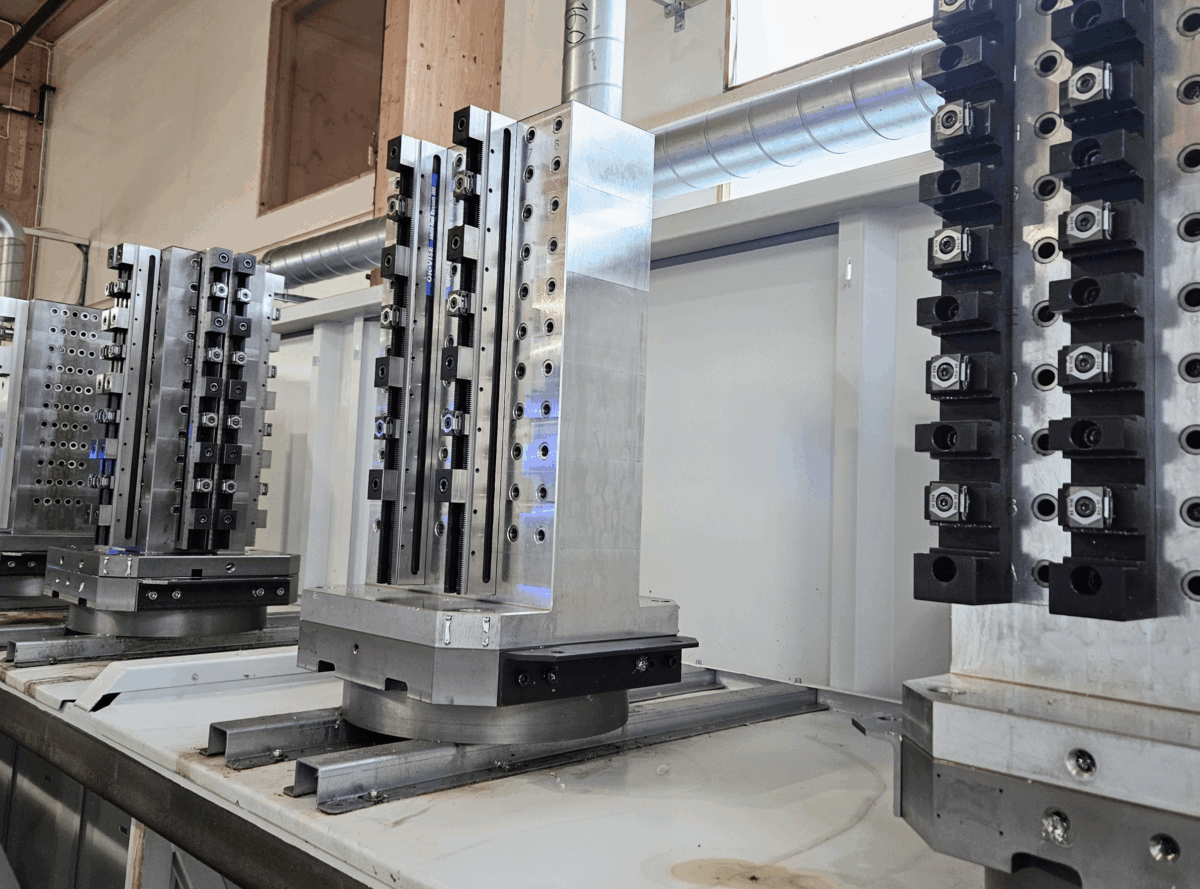
The articles in this series have shown that workholding affects much more than the moment when a workpiece is clamped.
It influences how effectively machine capacity is used and how much time is spent on non-cutting activities. It affects production costs through setup labour, engineering effort, fixture storage, scrap, and rework.
It also supports lean manufacturing by making processes more standardized, predictable, and easier to improve. At the same time, workholding influences operator safety, ergonomics, training, and the consistency of setup results.
These effects should not be considered separately.
A fixture that improves machine utilization but creates difficult manual handling is not a complete solution. A highly flexible system that requires excessive setup time may not match the production mix. A dedicated fixture that performs perfectly today may become expensive if the product changes regularly.
Similarly, a system designed for manual production may limit future automation, while a highly automated concept may be unnecessarily complex for low-volume work.
The strongest workholding decisions balance technical performance with the wider needs of production. They consider not only how the workpiece is held, but also how the fixture is designed, prepared, changed, verified, maintained, and reused.
Conclusion: Where should you start?
Start by observing production as it actually happens.
Look for the moments when machines wait, operators struggle, engineering work is repeated, or setup results vary between people and shifts. Consider which applications are stable and high-volume, which belong to changing product families, and which are produced only occasionally.
Then identify which parts of the process could benefit from standardization and which applications genuinely require dedicated engineering.
Select one practical pilot where the current problems are visible and the results can be followed. Measure the complete process rather than the fixture alone. Include machine time, labour, engineering, quality, handling, and future flexibility in the evaluation.
Workholding should not develop into a collection of isolated components. It should form a production concept that supports the company’s machines, products, operators, and long-term objectives.
The right solution may be dedicated or modular, manually operated or automated. In many factories, the most effective strategy will combine several approaches.
The strategic advantage does not come from selecting one workholding philosophy for every application. It comes from understanding where each approach creates the greatest value.
Ready to evaluate your manufacturing efficiency?
Let’s discuss how modern workholding solutions can help reduce setup-related inefficiencies and improve long-term production performance.

OK-VISE
Contact Us
"*" indicates required fields
Find more articles