- News and Articles
- Blog
Safety and ergonomics — The human side of workholding
Key takeaways
- Workholding is about people: Beyond precision, good fixturing improves operator safety and ergonomics.
- Ergonomics drives efficiency: Less physical strain means fewer fatigue-induced setup errors.
- Offline preparation minimizes risks: Assembling fixtures outside the machine enhances safety and boosts uptime.
- Standardization simplifies work: Modular tools and clear instructions eliminate guesswork and speed up training.
- Ergonomics supports quality: Consistent clamping methods ensure predictable part quality and a safer workplace.
Workholding offers a wide range of benefits
Throughout this article series, we have examined how workholding affects machine utilization, setup time, production costs, and lean manufacturing. However, one important part of the production process often receives less attention: the people who operate the machines, prepare the setups, and handle the workpieces every day.
Workholding is usually evaluated through technical factors such as clamping force, accuracy, rigidity, and accessibility. These are essential, but they are not the whole picture. A well-designed workholding process can also reduce physical strain, simplify repetitive tasks, lower the risk of setup errors, and create a safer and more predictable working environment.
These benefits may be difficult to express in a single calculation. Over time, however, they can influence productivity, quality, employee well-being, and the overall reliability of production.
Previous articles:
Safety begins before machining starts
Machining safety is often associated with guarding, tools, cutting parameters, and machine operation. In practice, many risks arise before the spindle starts.
Fixtures must be installed, workpieces positioned, clamping elements tightened, and setups verified. Depending on the application, this may involve lifting heavy fixture plates, reaching into the machining area, working in difficult positions, or repeatedly adjusting individual components.
Each task may appear routine, but repeated handling and unnecessary complexity increase the possibility of mistakes and physical strain.
A safer workholding process therefore begins with a few practical questions:
Can the fixture be prepared outside the machine? Are the components easy to access and position? Can heavy fixture changes be reduced? Is the clamping method clear and consistent? Can the operator verify that the workpiece has been positioned correctly?
Good workholding does not remove every risk from machining, but it can make the setup process more controlled and less dependent on improvised solutions.
Ergonomics is built through repetition
Ergonomics is not only about avoiding one particularly heavy lift. In machining, it is often the accumulation of small, repeated actions that determines how physically demanding the work becomes.
An operator may tighten the same bolts, reach into the same machine enclosure, reposition the same stops, or lift the same fixture several times during a shift. Individually, these actions may seem insignificant. Repeated hundreds or thousands of times, they can contribute to fatigue and increase the likelihood of errors.
The same principle applies to unnecessary movement around the workplace. Searching for fixture components, carrying dedicated fixtures from storage, collecting missing bolts, or repeatedly returning to the machine for adjustments all add work without adding value to the finished component.
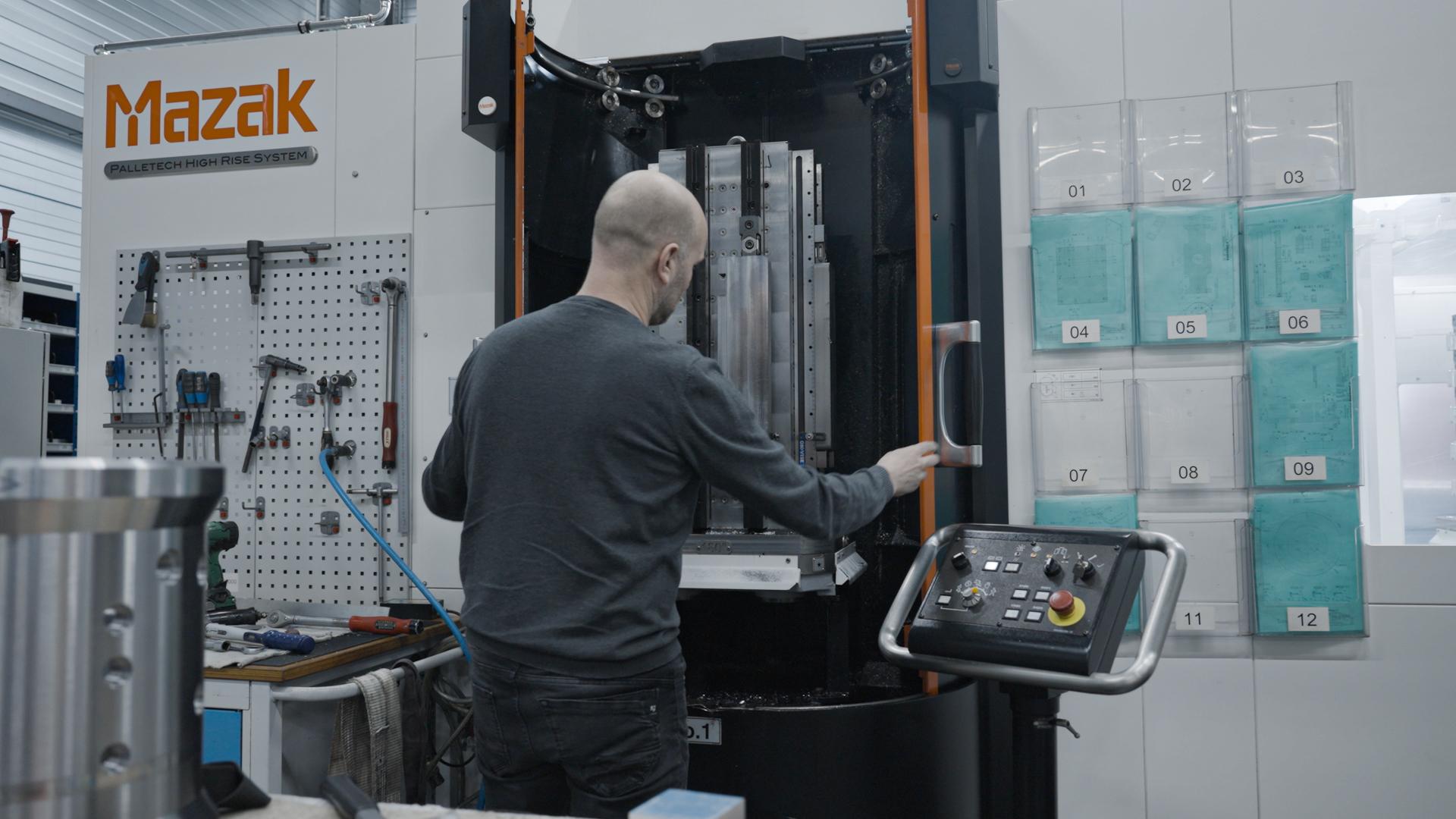
A more ergonomic workholding process reduces these unnecessary actions. Components are standardized, commonly used items are available where they are needed, and the fixture can be prepared in a more accessible working position whenever possible.
Managing fixture weight and handling with modern workholding
Dedicated fixtures can be the most effective solution in stable, high-volume production. Once developed and validated, they may provide extremely fast and repeatable changeovers.
However, dedicated fixtures can also become large and heavy, particularly when they have been designed for complex workpieces or multi-part machining. If fixture changes depend on manual lifting, the handling process should be considered as carefully as the machining performance itself.
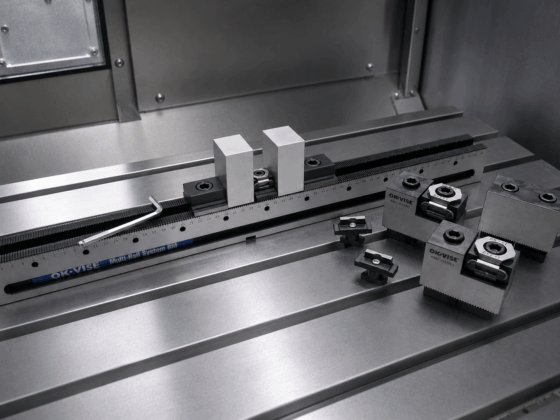
Modular fixture systems can reduce the need to move complete fixtures in some applications. Instead of removing the entire base, the setup can be adapted by repositioning rails, stops, side guides, parallels, or other standardized components.
This approach is not automatically lighter or faster in every case. Reconfiguring a modular setup can sometimes take longer than exchanging a prepared dedicated fixture. The right solution depends on production volume, product variation, available lifting equipment, and the overall fixture strategy.
The ergonomic benefit comes from choosing the most appropriate method and reducing unnecessary handling—not from using modularity for its own sake.
Offline preparation improves the working environment
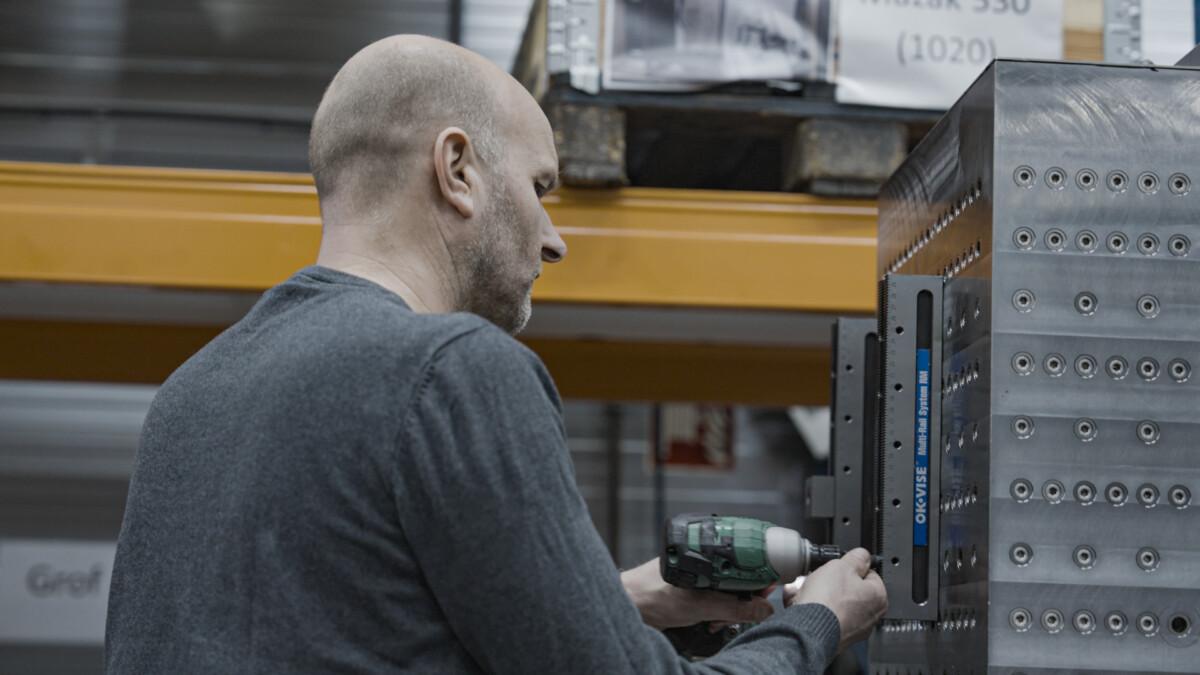
Preparing a setup inside a machine is often less comfortable than preparing it at a dedicated setup station. Access may be limited, lighting may be weaker, and the operator may need to reach over the machine table or work in an awkward position.
Offline preparation allows the fixture to be assembled and inspected at a suitable working height with better access to all components. Workpieces can be loaded, stops adjusted, and critical dimensions checked before the fixture is transferred to the machine.
This improves ergonomics while also reducing machine downtime.
Pallet pools, flexible manufacturing systems and automated pallet-changing systems already rely heavily on this principle. In these production environments, the next setup is prepared while the machine continues running.
The same approach can also create significant benefits in standalone machining centres and smaller production environments, where offline preparation is not always used as systematically. Full automation is not required: a standardized fixture plate, an additional pallet, or a repeatable zero-point interface may already allow part of the setup work to be moved outside the machine.
Standardization reduces setup errors
A setup process becomes more reliable when it follows a familiar and documented structure.
If every fixture uses different locating principles, clamping methods, and measurement procedures, operators must interpret each setup individually. This increases dependence on experience and makes mistakes more likely.
Standardization reduces this variation.
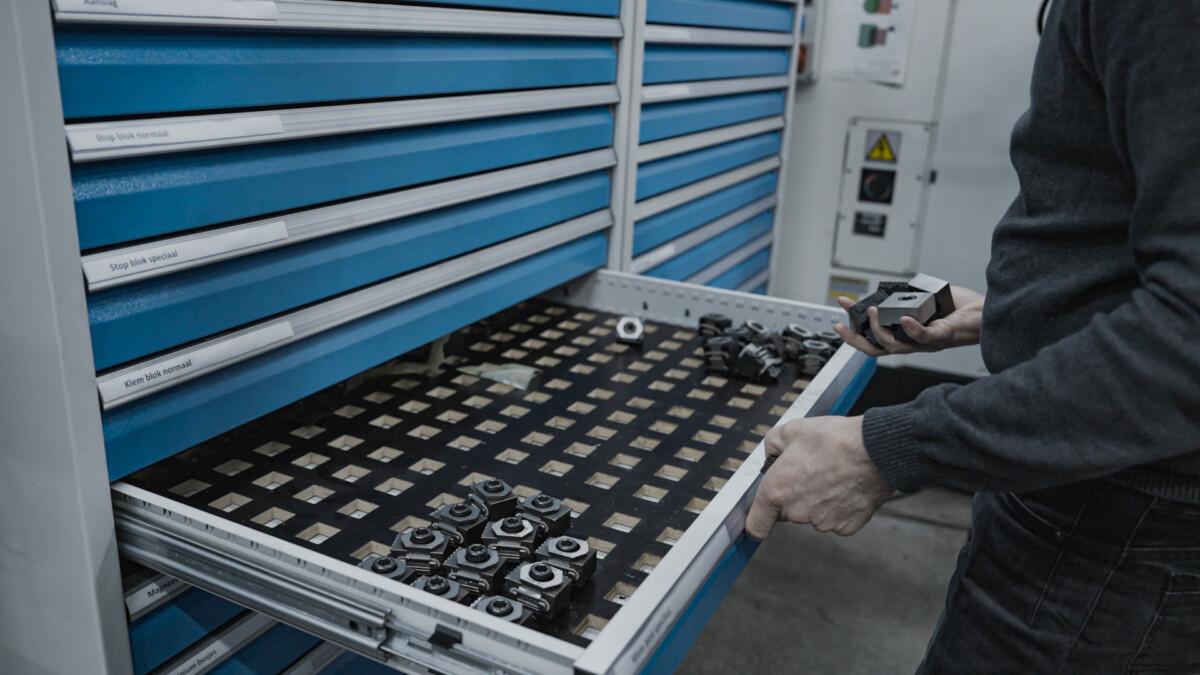
For example, a common fixture platform can establish consistent reference points. Standardized rails, stop modules, side guides, and parallels can be positioned according to documented setup instructions. Torque values, component locations, and verification steps can be repeated across different applications.
The result is not a process without human judgement. Skilled operators and manufacturing engineers remain essential. However, good standardization reduces the number of decisions that must be made from the beginning during every setup.
It can help prevent problems such as:
- installing a component in the wrong position
- using an incorrect clamping element
- forgetting a support or stop
- locating the workpiece against the wrong surface
- applying an inconsistent clamping force
- starting production before the setup has been fully verified
The simpler the setup is to understand and confirm, the easier it is to produce consistent results.
Clear setup instructions support safer work
Standardized components are most effective when combined with clear documentation.
A setup sheet should provide more than a photograph of the finished fixture. It should help the operator build and verify the setup in a logical sequence.
Depending on the application, useful information may include:
- fixture and component identification
- component positions and orientation
- locating surfaces
- tightening sequence and torque values
- workpiece loading direction
- critical clearance points
- inspection or probing instructions
- setup approval requirements
Visual instructions can be especially valuable. Numbered components, simple diagrams, and clearly marked reference positions reduce interpretation and make the process easier to follow.
Clear documentation also supports safety because it reduces trial-and-error adjustments. The operator does not need to reach into the machine repeatedly to correct a setup that could have been prepared correctly the first time.
Good workholding makes training easier
Manufacturing companies increasingly face shortages of experienced machinists. At the same time, many highly skilled employees are approaching retirement, taking decades of practical knowledge with them.
Workholding cannot replace machining expertise. It can, however, make production less dependent on knowledge held only by individual employees.
When fixtures are based on common principles, new operators do not need to learn a completely different system for every product. Familiar components, repeatable locating methods, and documented setup procedures create a common technical language across production.
An experienced machinist may still recognize problems faster and optimize a process more effectively. The difference is that a standardized workholding process gives less experienced operators a more reliable starting point.
This can shorten training time, simplify job rotation, and make it easier to transfer production between machines or employees.
It also allows experienced personnel to focus their knowledge on genuinely demanding manufacturing challenges instead of repeatedly solving basic setup problems.
Consistent clamping supports predictable quality
Human error is not the only concern. Human variation is also important.
Two operators may position or tighten a workpiece differently, even when both are following the same general instructions. If the fixture is sensitive to these differences, production quality may vary between shifts or employees.
A controlled workholding system can reduce this variation through:
- clearly defined locating surfaces
- repeatable component positions
- specified torque values
- predictable clamping-force development
- mechanical stops that confirm workpiece position
- fewer manual alignment steps
Repeatability should not be confused with full automation. Manual setups can also be highly repeatable when the fixture guides the operator toward the correct result.
The objective is to make the correct method straightforward and the incorrect method difficult.
This improves quality, but it also creates a more confident working environment. Operators can trust the setup process instead of relying on repeated adjustments or judgement-based positioning.
Read more: Why good fixturing matters?
Ergonomics and productivity support each other
Safety and ergonomics are sometimes treated as separate from productivity. In reality, they often support the same operational goals.
A setup that is easier to access is usually faster to prepare. A fixture that is simpler to understand is usually less likely to cause errors. A lighter or more manageable handling process usually reduces both physical strain and changeover time. Clear documentation supports both training and repeatability.
The relationship can be summarized as a practical chain:
Better access and simpler handling
→ less unnecessary physical effort
→ lower operator fatigue
→ fewer setup mistakes
→ more consistent production
→ improved quality and delivery reliability
Ergonomic improvements should not be justified only by the number of seconds saved. Their value also comes from making good performance sustainable throughout the shift and across the working life of the equipment.
Automation changes the operator’s role
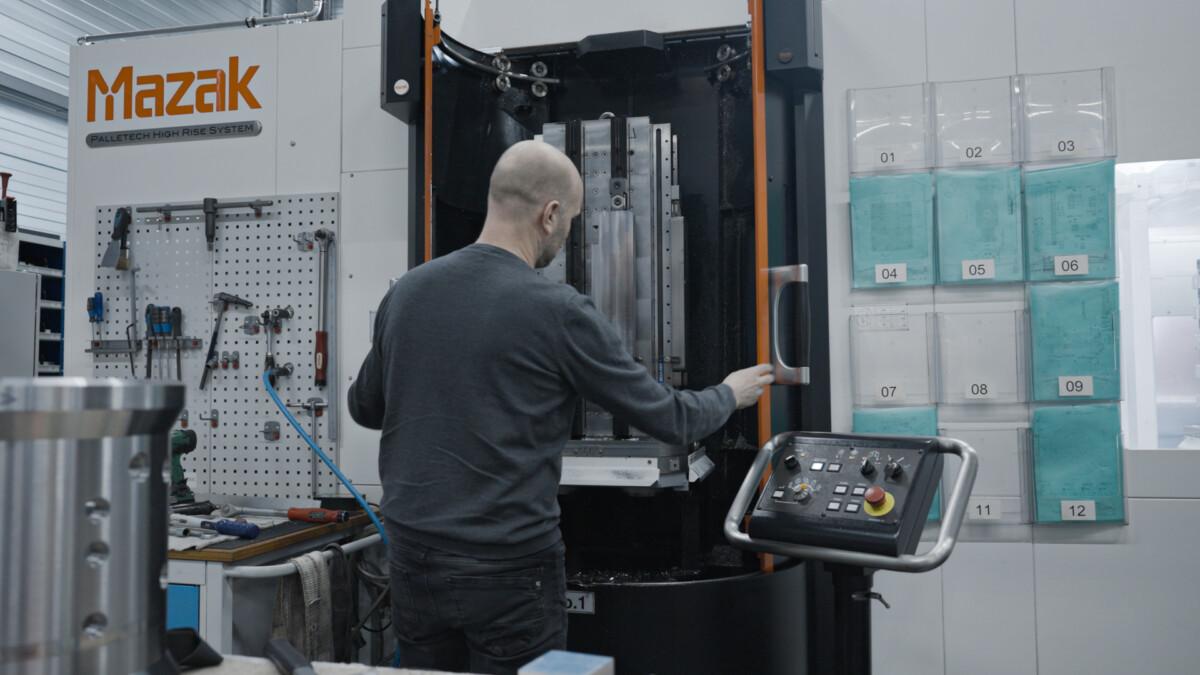
As production becomes more automated, workholding remains closely connected to the operator.
In an automated pallet pool, robotic cell, or flexible manufacturing system, operators may spend less time loading individual parts directly into the machine. Their work shifts toward preparing pallets, maintaining fixture availability, checking component condition, verifying setups, and resolving exceptions.
This makes clarity and standardization even more important.
An automated system can continue producing for long periods, but only if the workpieces are located correctly, the fixtures are reliable, and the setups have been prepared consistently. A small error made at the setup station may affect an entire unattended production batch.
Automation therefore does not remove the human side of workholding. It increases the importance of designing processes that are easy to prepare, inspect, and verify.
Workholding should support both the machine and the operator
The primary task of workholding is to locate and secure the workpiece throughout machining. But the most effective solutions also support the people responsible for production.
They reduce unnecessary lifting and reaching. They make setups easier to prepare and verify. They limit process variation and help prevent avoidable mistakes. They also create a more consistent foundation for training, automation, and continuous improvement.
Dedicated fixtures remain an excellent solution where stable production volumes justify them. Modular systems are particularly valuable where products change, batch sizes vary, and fixture components must be reused. In both cases, safety and ergonomics should be part of the fixture decision from the beginning—not an afterthought once production has already started.
Good workholding improves more than machining performance. It helps create a production process that is safer, more comfortable, more repeatable, and less dependent on individual working methods.
In modern manufacturing, improving the human side of production can be just as important as improving the machine itself.
Ready to evaluate your manufacturing efficiency?
Let’s discuss how modern workholding solutions can help reduce setup-related inefficiencies and improve long-term production performance.

OK-VISE
Contact Us
"*" indicates required fields