- Blog
- News and Articles
Standardized workholding — A foundation for lean manufacturing
Key takeaways
- Lean manufacturing is built on standardized and repeatable processes.
- Modular workholding helps eliminate unnecessary waste throughout production.
- Standardized setups simplify engineering, operator training, and production planning.
- Reusable fixture platforms reduce inventory, storage requirements, and setup complexity.
- Standardization creates a solid foundation for automation and continuous improvement
Workholding solutions play a key role in production
In the previous articles of this series, we explored how workholding influences production efficiency, setup time, and operational costs. While these topics are often evaluated individually, they all contribute to a broader objective: creating a lean manufacturing environment.
Previous articles:
- Part1: Production efficiency starts with the right workholding
- Part 2: Workholding saving time in production
- Part 3: What poor workholding really costs?
Lean manufacturing is commonly associated with reducing waste, improving flow, and maximizing value. Although discussions often focus on production planning, automation, or machine utilization, one important contributor is frequently overlooked—workholding.
Well-designed workholding does more than secure a workpiece. It helps standardize production, simplify workflows, reduce unnecessary variation, and create a production environment that is easier to improve over time.
Read more: Why good fixturing matters?
Lean manufacturing is about eliminating waste
At its core, lean manufacturing is about removing activities that do not create value for the customer.
Workholding-related waste in machining environments often includes:
- Searching for fixtures or setup components
- Manual adjustments during setup
- Rebuilding fixtures for new workpieces
- Waiting for machines during lengthy changeovers
- Storing large numbers of dedicated fixtures
- Repeating setup verification
While each activity may seem insignificant on its own, together they consume valuable engineering time, operator effort, and machine capacity. As discussed in Part 2: Workholding saving time in production, reducing setup time is one way to eliminate waste. However, lean manufacturing aims to remove unnecessary work altogether—not simply perform it faster.
Standardization reduces variation
One of the fundamental principles of lean manufacturing is standardization.
When every setup is built differently, every operator develops individual working methods. Engineering documentation becomes more complex, training requires more time, and production quality depends increasingly on individual experience rather than repeatable processes.
Standardized workholding helps eliminate this variation. Instead of creating a unique fixture for every new workpiece, manufacturers can reuse common fixture platforms and standardized positioning elements across multiple part families. The setup process becomes familiar regardless of who performs it, making production more predictable and repeatable.
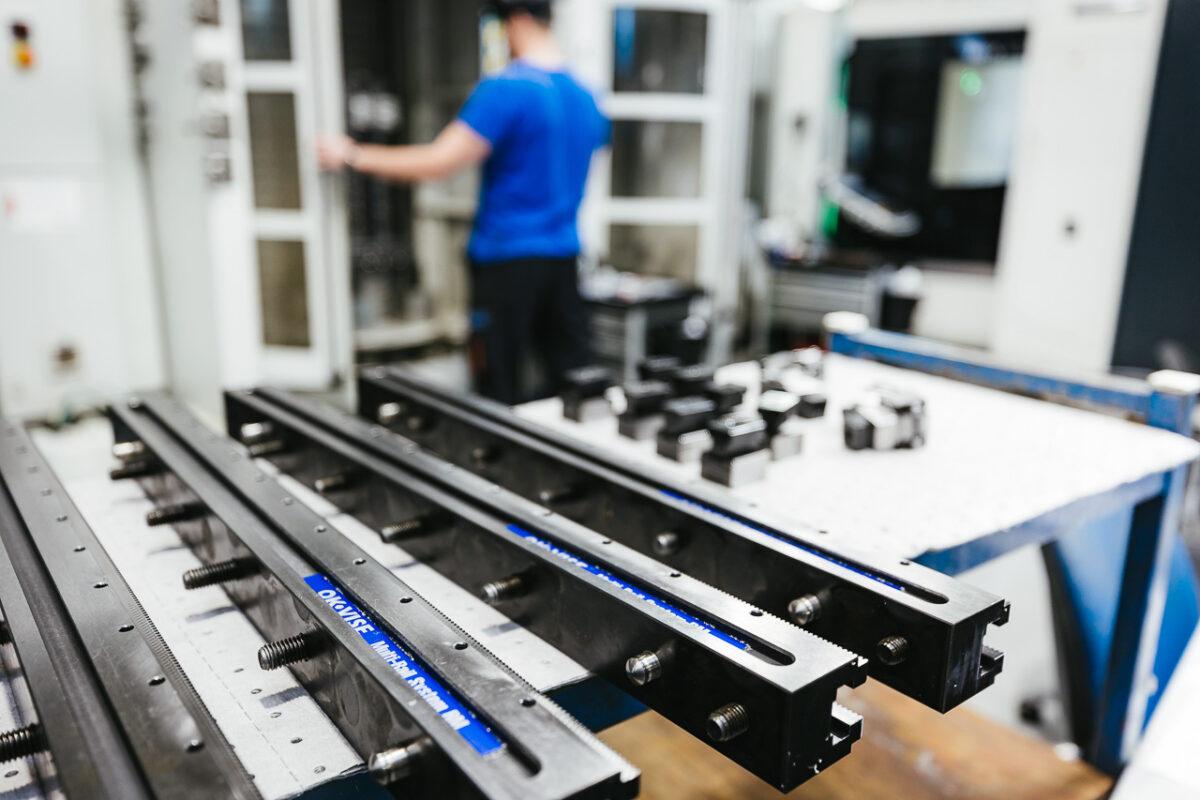
This consistency simplifies documentation, reduces setup errors, and shortens the learning curve for new operators. Ultimately, standardized workholding creates a common production language across the workshop.
Standardization reduces engineering effort and fixture complexity

Standardization does not necessarily mean replacing every dedicated fixture with a modular one. In stable high-volume production, a dedicated fixture designed for a single component is often the most efficient solution. The advantages of modular workholding become most apparent in high-mix and medium-volume production, where new workpieces are introduced regularly and product variation is high.
In these environments, continuously designing, manufacturing, storing, and maintaining dedicated fixtures can gradually become a production burden. Every new fixture requires engineering effort, manufacturing time, documentation, storage space, and ongoing maintenance throughout its lifecycle.
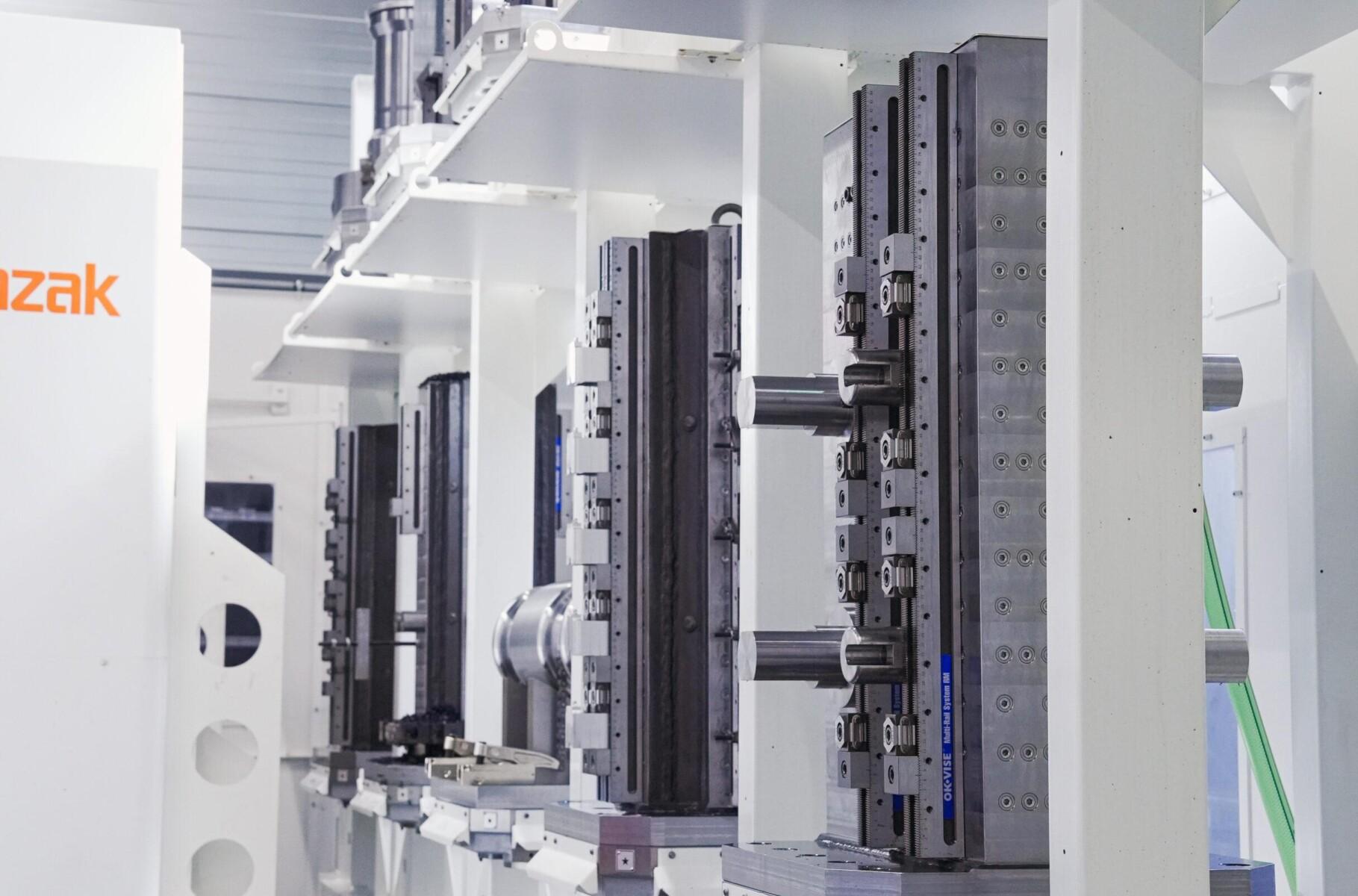
A standardized modular platform offers a different approach. Instead of designing a completely new fixture for every workpiece, manufacturers can often reuse an existing fixture platform by repositioning rails, stop modules, side guides, parallels, and other standardized positioning elements. For similar part families, these adjustments may take only a few minutes while maintaining a documented and repeatable setup.
This approach not only reduces engineering effort but also limits the number of dedicated fixtures that need to be manufactured and stored. Rather than accumulating an ever-growing inventory of fixture solutions, manufacturers build a flexible library of reusable components that can be configured for a wide range of applications.
The objective is not to eliminate dedicated fixtures, but to use them where they create the greatest value while standardizing production wherever flexibility, repeatability, and responsiveness provide a measurable operational advantage.
Our customer, Kytola Instruments, replaced most of their dedicated fixtures with modular workholding. Watch their customer story here: Case Kytola Instruments – FMS up and running.
Offline setup preparation supports lean flow
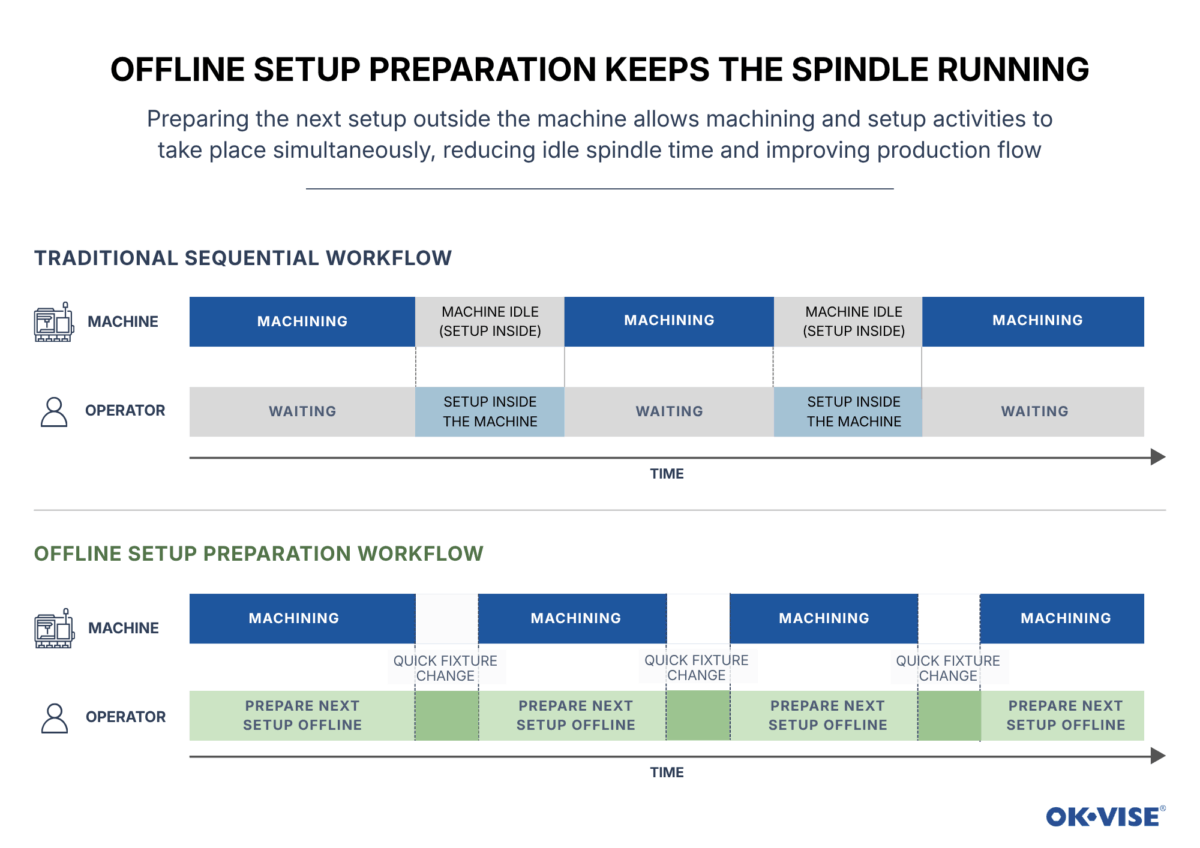
One of the most effective ways to improve production flow is to separate setup work from machining time.
While pallet pool systems and flexible manufacturing systems (FMS) have long relied on offline setup preparation to maximize spindle utilization, the same principle is often underutilized in standalone machining centers. Even without automation, preparing the next setup outside the machine can significantly reduce idle spindle time and improve production flow.
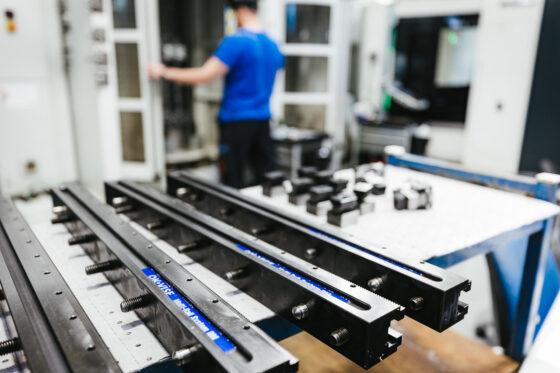
For example, a zero-point fixture plate combined with a modular rail system allows operators to prepare the next setup outside the machine. Workpieces can be located using standardized stop modules, side guides, and parallels before the current machining cycle has finished.
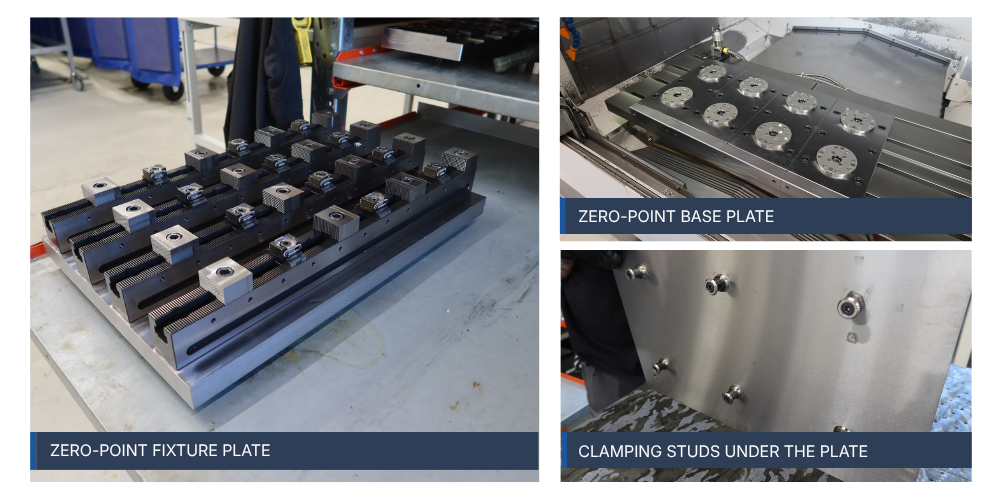
When machining is complete, the prepared fixture can be exchanged quickly and repeatably. This parallel workflow reduces idle spindle time while creating a smoother production flow with fewer interruptions. Rather than waiting for the machine to become available before starting setup, setup becomes an independent process running alongside machining.
Standardized workholding creates a foundation for automation
Automation depends on repeatability. Whether using pallet systems, robotic loading, or fully automated manufacturing cells, every automated process relies on predictable workpiece positioning and consistent setups.
Standardized workholding supports this by creating repeatable fixture layouts that can be documented, reproduced, and transferred between machines. The benefits extend beyond automation itself. Repeatable setups improve production planning, simplify scheduling, and make future process improvements easier to implement.
In many cases, automation is not the starting point—it is the natural result of a standardized production process.
Lean manufacturing is continuous improvement
Perhaps the greatest advantage of standardized workholding is that it supports continuous improvement. When setups are repeatable and based on common building blocks, improvements made today can easily be reused tomorrow.
- Engineering knowledge becomes reusable rather than project-specific.
- Operators spend less time solving the same problems repeatedly.
- Production becomes easier to analyse, optimize, and scale.
- Rather than constantly designing new solutions, manufacturers continuously improve existing ones.
That philosophy lies at the heart of lean manufacturing.
Summary: How workholding supports lean production
Lean manufacturing is built on standardized processes that eliminate unnecessary variation, simplify workflows, and enable continuous improvement.
Modern modular workholding supports these objectives by reducing setup complexity, improving repeatability, minimizing fixture inventory, and creating more predictable production.
As shown throughout this article series, efficient workholding is not simply about holding a workpiece. It is about building a production system that is easier to operate, easier to improve, and better prepared for future manufacturing challenges.
Ready to evaluate your manufacturing efficiency?
Let’s discuss how modern workholding solutions can help reduce setup-related inefficiencies and improve long-term production performance.

OK-VISE
Contact Us
"*" indicates required fields
Find more articles