- Blog
- News and Articles
Production efficiency starts with the right workholding
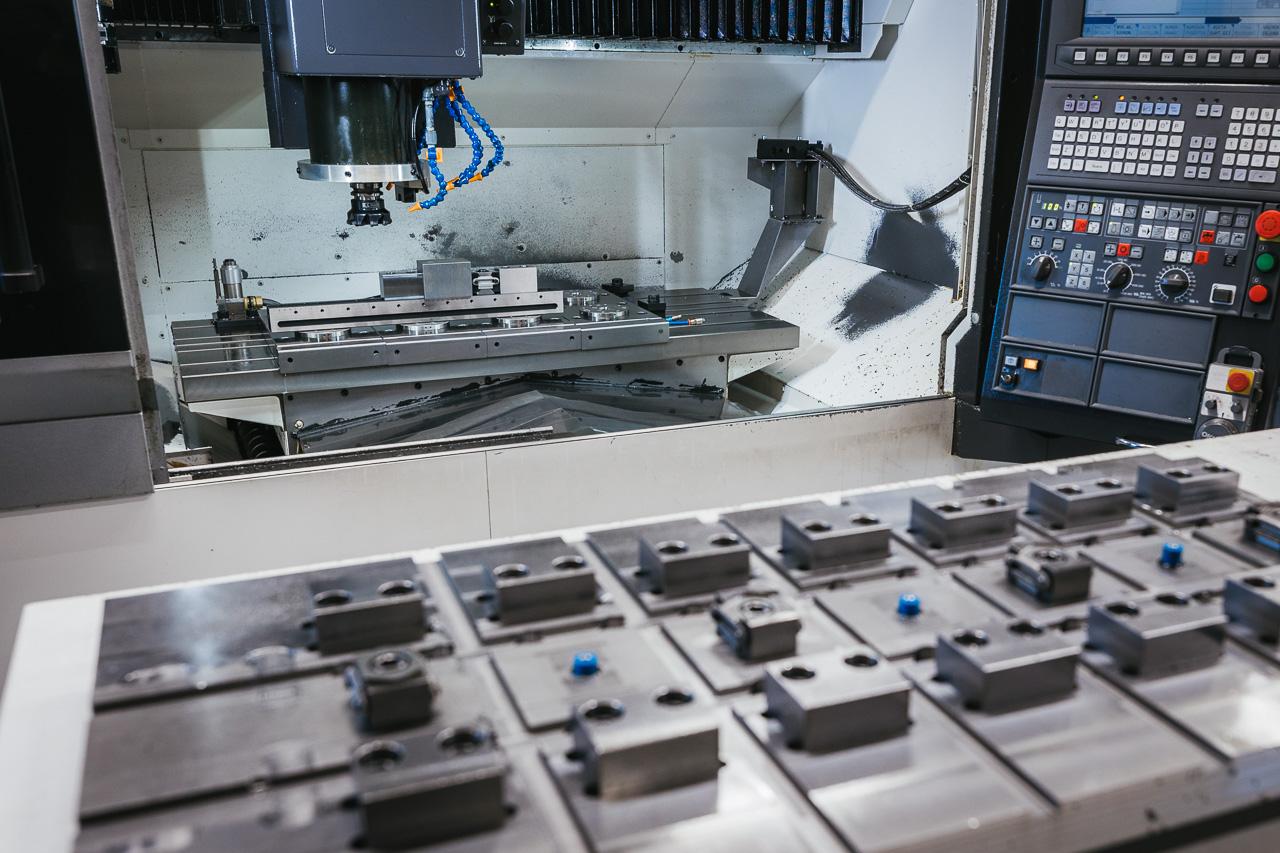
In many machine shops, productivity improvements are expected to come from new machines, faster tools, or automation investments. Yet one of the most impactful factors often remains overlooked: workholding.
The way parts are clamped, positioned, and repeated in the machining process directly affects accuracy, setup time, and ultimately how much you get out of your existing capacity.
If your goal is to increase output without increasing capital expenditure, workholding is one of the most practical places to start.
Why workholding is often an untapped efficiency driver
Workholding is frequently treated as a supporting function — something that simply needs to “work.” In reality, it defines how efficiently your entire machining process runs.
When workholding is not optimized, the impact shows up in subtle but costly ways:
- Repeated manual adjustments
- Inconsistent part positioning
- Longer setup times
- Limited access for machining operations
These are rarely tracked as a single KPI, but together they reduce spindle uptime and increase operator workload.
By contrast, well-designed workholding solutions bring stability and predictability into production — two factors that directly translate into efficiency.
Repeatability and accuracy reduce hidden waste
Every time an operator needs to re-align, re-measure, or adjust a part, productivity is lost.
High repeatability in CNC workholding means less manual intervention, fewer measurement cycles and reduced risk of scrap.
Accurate and consistent clamping ensures that parts are positioned correctly every time. This is especially critical in multi-operation machining, where even small deviations can accumulate.
Low-profile clamping solutions, for example, not only secure the part but also improve access for tooling. This reduces the need for repositioning and enables more machining in a single setup.
Faster changeovers increase spindle time
Setup time is non-productive time. While it may seem small on a per-job basis, it accumulates quickly.
Modern modular workholding systems are designed to:
- Minimize setup complexity
- Enable faster fixture changes
- Standardize clamping across different parts
For high-mix, low-volume production, this flexibility is essential. For higher volumes, it ensures consistency and repeatability across batches.
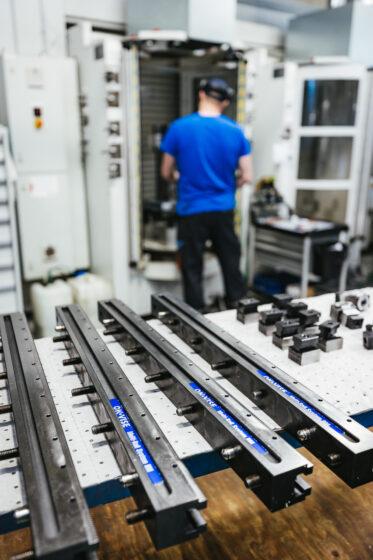
A modular approach — such as rail-based systems — allows the same base setup to be reused and adapted. Instead of building dedicated fixtures for each part, you create a flexible platform that evolves with production needs.
Workholding and automation go hand in hand
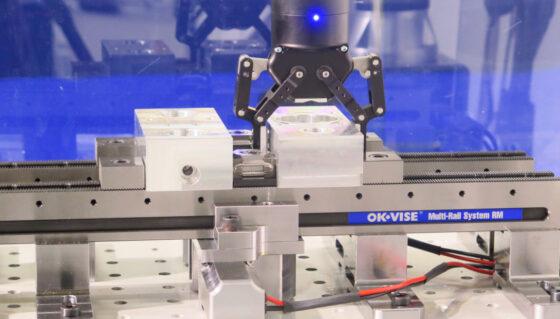
Automation is only as reliable as the process it supports.
If part positioning varies or clamping is inconsistent, automation becomes difficult to implement — and even harder to trust.
Workholding designed for automation enables:
- Consistent loading and unloading
- Reliable positioning for robotic handling
- Reduced need for manual correction
In this context, workholding is not just a mechanical solution — it is a prerequisite for scalable automation.
Traditional vises vs. modern workholding solutions
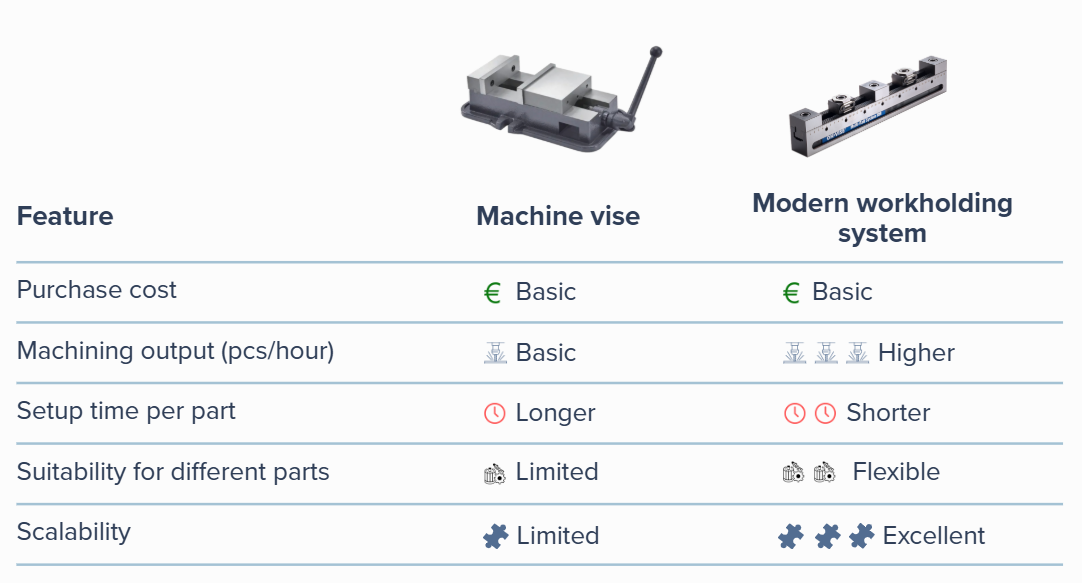
Machine vises are widely used for a reason: they are simple, familiar, and versatile. However, they are not always the most efficient option.
Typical limitations include:
- Limited flexibility for complex geometries
- Inefficient use of machine table space
- Restricted tool access
- Time-consuming setups for varying parts
Modern workholding solutions address these challenges by focusing on modularity, accessibility, and repeatability.
For example:
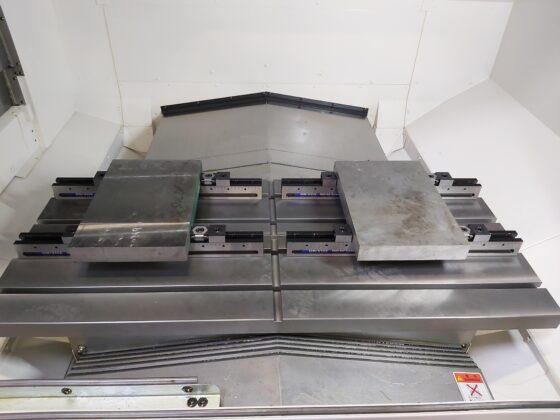
Multi-Rail systems enable flexible fixture layouts across different part sizes and batch types
Low-Profile clamps reduce obstruction and allow more complete machining in one setup
Additional perspective:
Workholding systems that allow multiple workpieces to be clamped in a single setup are, in many cases, a more cost-effective alternative to traditional machine vises.
When reduced machining time and shorter part changeovers are taken into account, multi-part clamping solutions can deliver productivity improvements of up to 20–30%.
The goal is not to eliminate traditional methods entirely, but to recognize where they limit productivity.
“Your machine capacity is not defined by spindle speed — it’s defined by how efficiently you can use it.”
Example: How setup time impacts annual capacity
Let’s look at a simplified example.
In this example, the time savings come from moving away from a traditional machine vise setup to a more modular workholding approach.
Instead of clamping one part at a time and re-aligning for each job, a rail-based system enables multiple parts to be fixed in a single setup. At the same time, low-profile clamping improves tool access, reducing the need for repositioning.
Assumptions:
Setup time reduced: 20 minutes per job
Jobs per week: 15
Machine hourly cost: 80 €/hour
Calculation:
Time saved per week:
15 jobs × 20 min = 300 min = 5 hours
Value per week:
5 hours × 80 € = 400 €
Annual impact (50 weeks):
400 € × 50 = 20,000 €
This example illustrates a key point:
Small improvements in setup efficiency can translate into significant financial impact — without adding a single new machine.
From setup efficiency to overall productivity
While this article focuses on the broader impact of workholding, it’s worth noting that setup time alone represents a major opportunity for improvement.
In upcoming parts of this series, we will take a closer look at:
- How setup time directly affects profitability
- The true cost of inefficient workholding
- The role of workholding in lean manufacturing and space optimization
Summary: What efficient workholding enables
- More consistent machining results
- Reduced setup and adjustment time
- Better utilization of existing machines
- Improved readiness for automation
- Increased production capacity without capital investment
Key takeaways for decision-makers
- Workholding is not a detail — it is a core driver of machining productivity
- Even small reductions in setup time have measurable financial impact
- Modular and low-profile solutions improve flexibility and machine utilization
- Traditional methods may limit efficiency in modern production environments
- Capacity gains can often be achieved without new equipment investments
Ready to evaluate your current setup?
Let’s evaluate the efficiency of your current workholding solutions – get in touch.

OK-VISE
Contact Us
"*" indicates required fields