Pallets tied to individual jobs
Keeping a dedicated fixture on a pallet makes sense for recurring work. When the job rarely runs, that pallet may be unavailable for other parts.
PALLET POOLS & FLEXIBLE MANUFACTURING SYSTEMS
Keep pallet setups ready as jobs and priorities change. OK-VISE modular workholding helps you adapt fixtures to different workpieces, use pallet space effectively and rebuild proven setups for repeat orders.
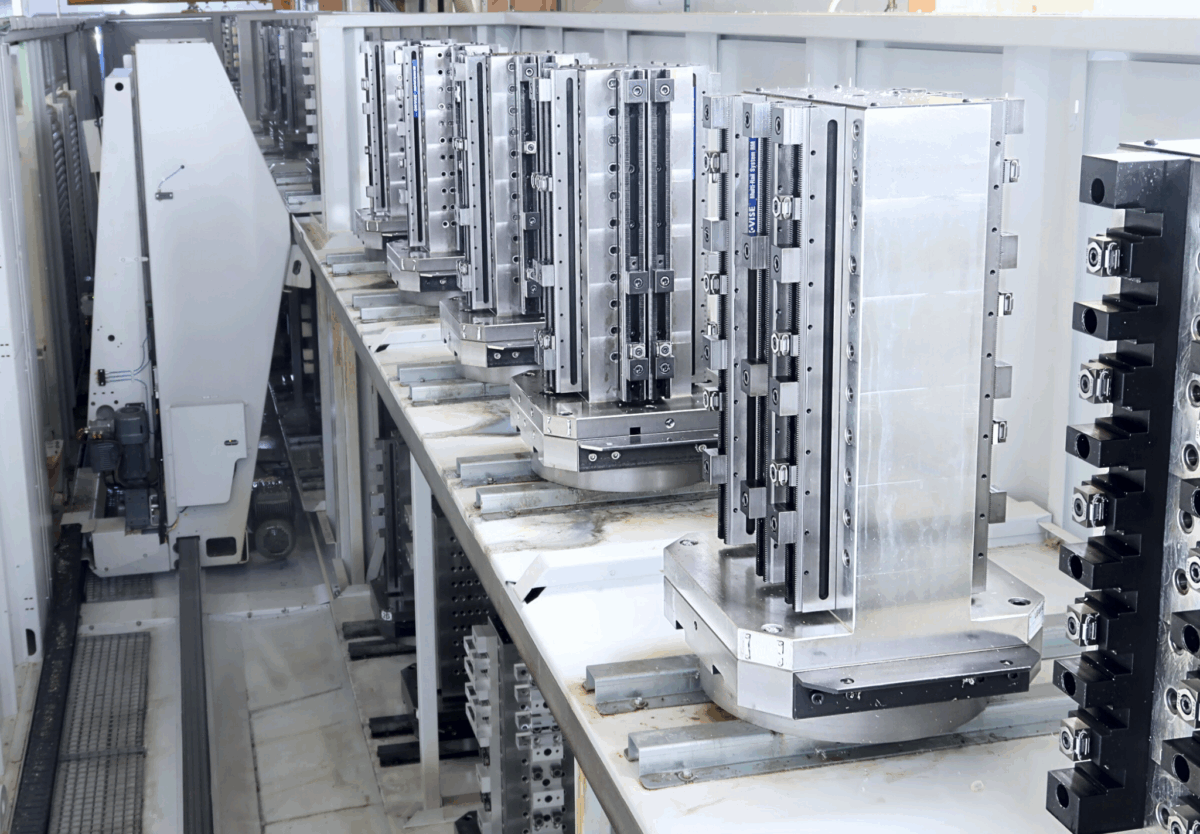
COMMON WORKHOLDING CHALLENGES
A pallet pool gives you options for scheduling production. Those options become more useful when the available fixtures match the jobs you need to run.
Keeping a dedicated fixture on a pallet makes sense for recurring work. When the job rarely runs, that pallet may be unavailable for other parts.
A change in workpiece size or geometry can require extensive fixture modifications before a pallet is ready for production.
Bulky clamping arrangements can leave too little room for additional workpieces, even when the parts and machining operations would allow them.

The OK-VISE approach
The OK-VISE Multi-Rail System combines base rails with adjustable clamps, stops and other locating components. Installed on a suitable pallet, fixture plate or tooling block, it provides a reusable foundation for different fixture layouts.
Reposition modules at the setup station to suit different workpiece dimensions. Reuse suitable components and reduce the need to build a complete new fixture.
Compact clamping elements help you use the available mounting area. Arrange workpieces with sufficient space for tools, loading and chip removal.
When changing individual modules is impractical, use an interchangeable fixture plate. Select bolt mounting or a suitable zero-point interface to match your changeover needs.
Record module positions, locating references and clamping instructions. Clear setup records give operators a consistent starting point when the job returns.
EXPLORE THE PRODUCTS
Choose the workholding base, modular systems and dedicated fixture components to suit your workpieces and changeover needs.
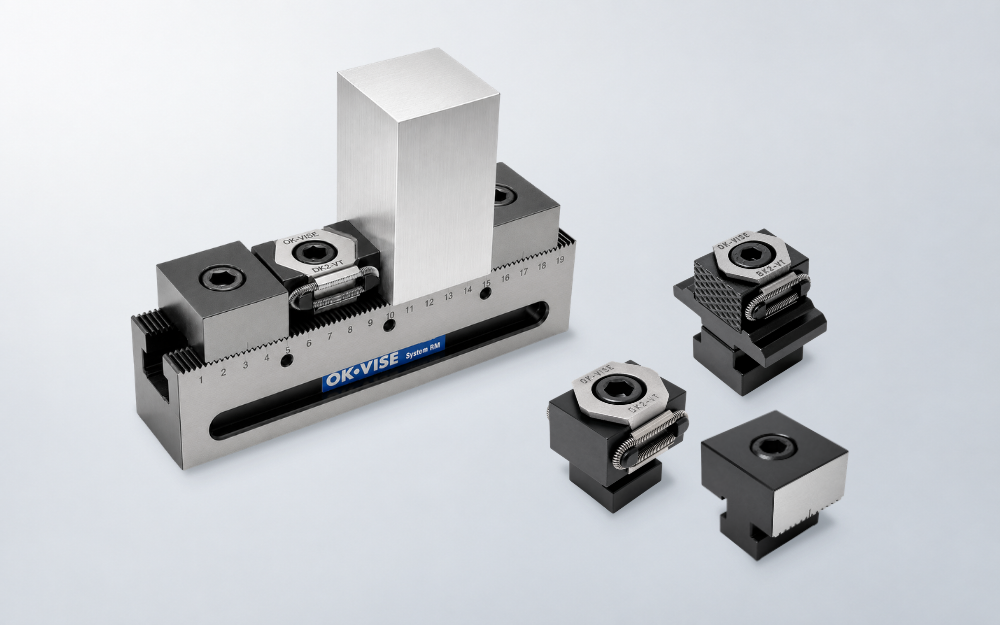
Build adjustable layouts using reusable clamps, stops and supports. Configure the system for different workpieces and available pallet space.
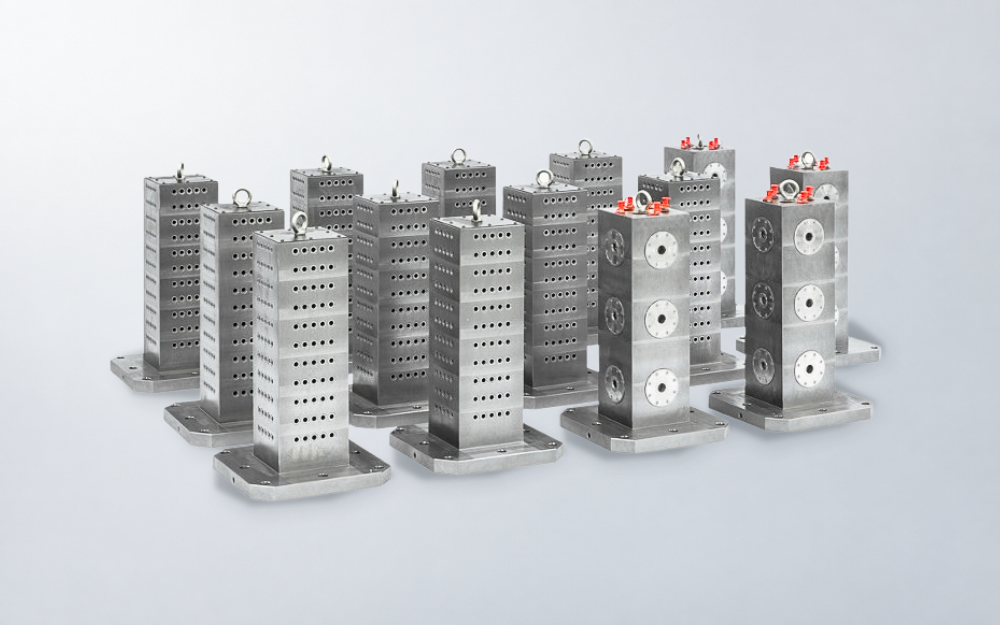
Use tooling blocks to arrange fixtures across multiple faces. Add a suitable zero-point interface where complete fixture plates need to be exchanged frequently.
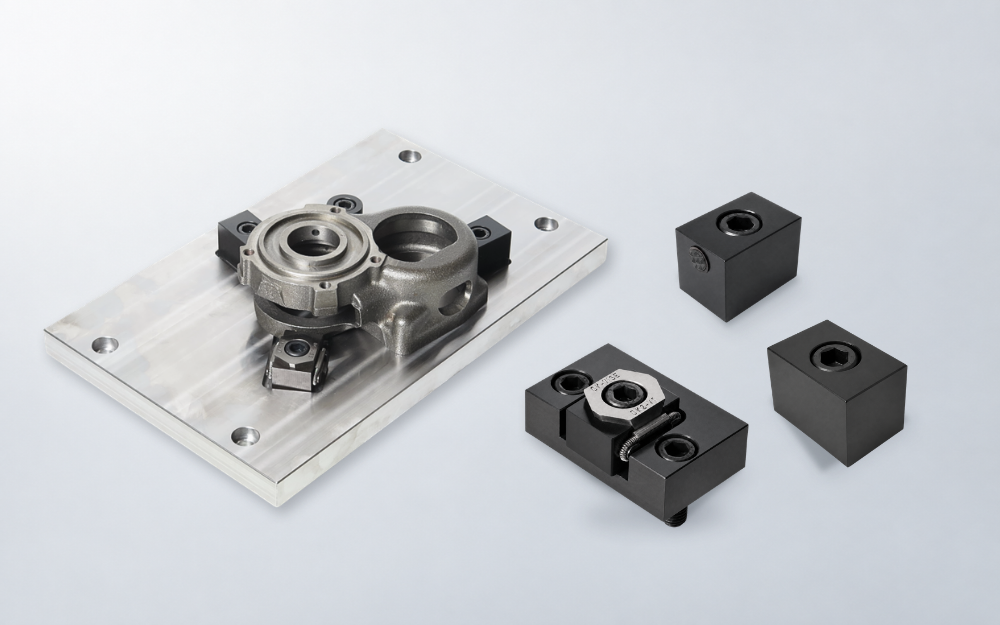
Combine standard clamping and locating components with a custom fixture base for specific workpieces or recurring jobs.
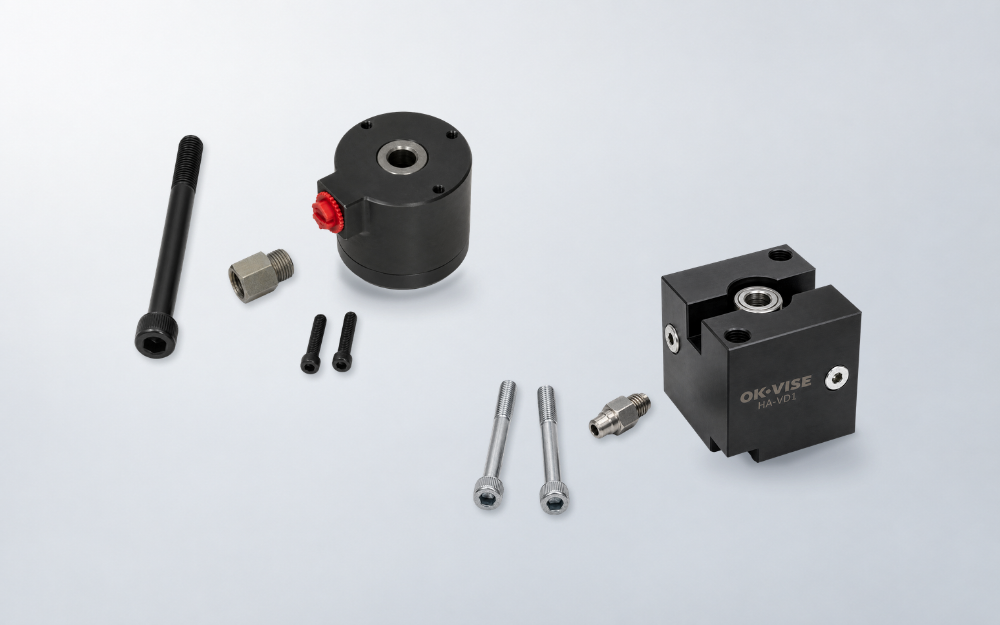
Explore hydraulic and electrical actuation when the process requires powered clamping, for example with robotic workpiece loading.
CUSTOMER STORY — PARKER HANNIFIN MANUFACTURING FINLAND
Parker Hannifin Manufacturing Finland handles batches ranging from single pieces to thousands. Its workholding solution combines triangular tooling blocks, interchangeable fixture plates and the OK-VISE Multi-Rail System.
The approach makes it easier to assemble different configurations from standard modules and document fixtures for repeat orders.
Parker Hannifin Manufacturing Finland“This concept allows us to clamp 95% of our product range and supports around 900 different fixture setups each year.”
Start with representative workpieces, typical batch sizes and how often each job returns. Check the required machining operations against the available pallet space, load capacity and tool access. Allow room for loading, clamping and chip removal.
Use this information to decide which fixtures to keep assembled for repeat jobs, which layouts to adapt between orders and where interchangeable fixture plates would simplify changeovers.
FAQ
Plan workholding alongside the machine and pallet system. Representative workpieces, batch sizes and machining operations help define the required mounting area, tool access and loading arrangements before the setup is finalized.
Yes. Use modular layouts for jobs that benefit from adjustment and component reuse. Keep dedicated fixtures where the workpiece geometry or recurring production requirements justify them.
Secure clamping and consistent workpiece location are essential parts of an unattended process. The complete setup must also be verified together with the machining program, tooling, chip management and process monitoring.
Automated clamping is particularly useful when a robot loads and unloads workpieces, or when frequent loading cycles involve several clamps. It can reduce repeated manual tightening and allow clamping and release to be integrated into the loading sequence. The choice depends on how workpieces are handled, the number of clamping points and the time available for loading.
DISCUSS YOUR APPLICATION
Tell us about your pallet system, typical workpieces and batch sizes. Include pallet or tooling block dimensions if available, and describe what you would like to improve.
We can help assess which setups could use adjustable modules, interchangeable plates or dedicated fixtures.

Prefer local support?
"*" indicates required fields
